

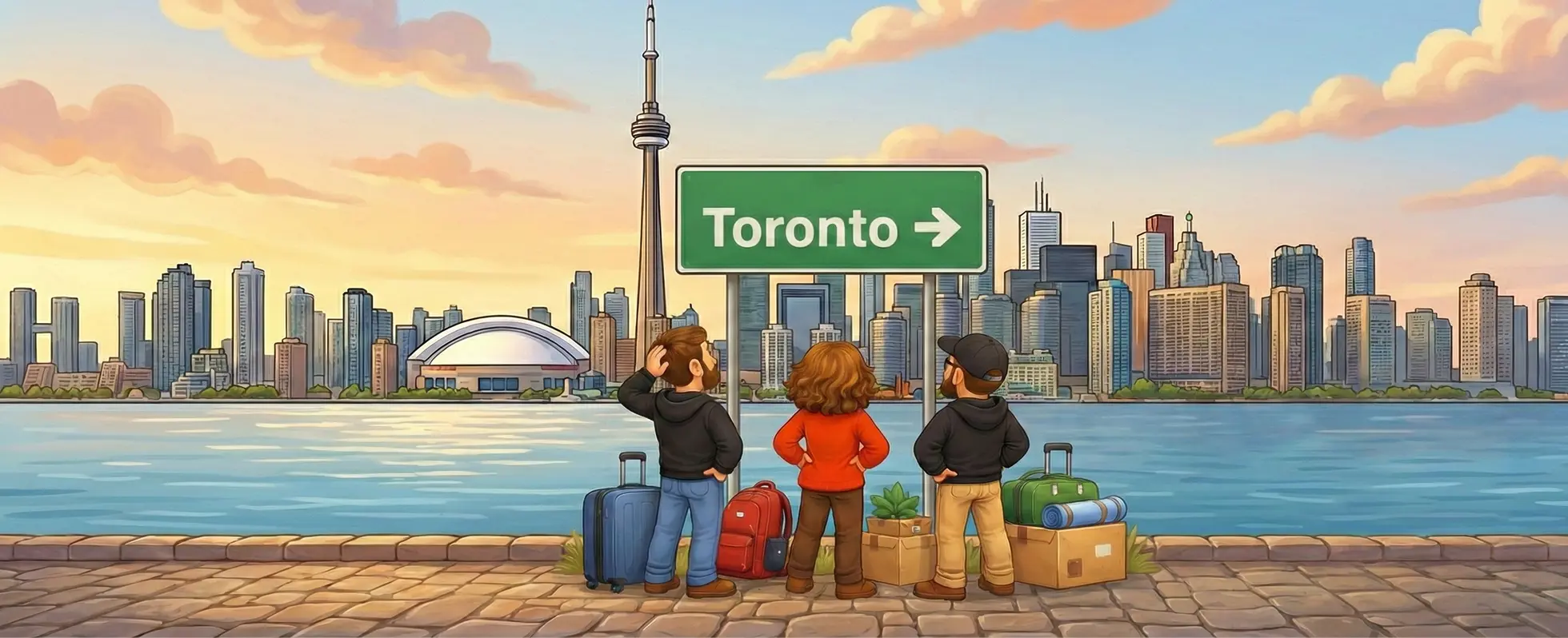
Toronto remains a city of immense opportunity, but it requires you to know the rules of the game. Rental prices have softened slightly in the core, the transit system is more integrated than ever, and bureaucracy is increasingly digital.
This guide cuts through the noise to help you get settled without wasting time on common mistakes.
1. First Documents: Where to Go?
The most common mistake for newcomers is confusing federal and provincial offices. Remember this simple division:
- Service Canada (Federal Level): This is where you get the right to work.
- What you need: SIN (Social Insurance Number). This is your tax ID. You cannot legally work or open a bank account without it.
- Tip: Visit an office in person (e.g., at City Hall or Scarborough Centre). You will walk out with your number immediately. If you apply online, the letter will take about 2 weeks to arrive by mail.
- ServiceOntario (Provincial Level): This is where you get documents for daily life.
- What you need: Health Card (OHIP) and Driver’s License.
- Important: Only go here after you have a permanent address (lease agreement) and your SIN.
2. Housing: Where to Live & Costs
As of early 2026, the rental market has become slightly more favorable for tenants compared to previous years.
- 1 Bedroom (Condo): ~$2,200 - $2,450 in the Downtown Core; ~$2,000 - $2,200 in suburbs (Etobicoke, Scarborough).
- Basements: The most affordable option, typically starting from $1,600.
Key Search Tips:
- The "Rent Control" Golden Rule: This is critical for your financial stability.
- If the building was first occupied before November 15, 2018: The landlord can only raise the rent by the provincial guideline (~2.5% per year).
- If the building is newer (post-2018): The landlord can raise the rent by any amount they choose after the first year. Prioritize older buildings for stability.
- No Credit History? You likely have a credit score of zero. To secure a unit, be prepared to offer 3-6 months of rent upfront or show a bank statement with significant savings to prove solvency.
- 2026 Update: Eglinton Crosstown LRT: Line 5 opens in February 2026. Neighborhoods along Eglinton Avenue (especially in Scarborough and York) are now much more accessible, while rents there remain lower than downtown.
3. Healthcare: Accessing the System
- OHIP (Insurance): Good news: the "waiting period" remains eliminated. You are eligible for health coverage immediately upon arrival if you have valid status (PR or Work Permit for 6+ months). The physical card takes weeks to arrive, but the paper transaction record works immediately.
- Family Doctor: Finding your own doctor is difficult.
- Register with Health Care Connect.
- Do not wait for them to call you. Call clinics in your neighborhood directly and ask: "Are you accepting new patients?"
- Health811: If you are sick but it’s not an emergency, dial 811 (or chat online). A registered nurse will advise if you need a hospital or if you can treat it at home.
4. Transportation: Saving Money
Toronto has eliminated the "double fare" penalty for commuters moving between the city and suburbs.
- "One Fare" Program: If you take the subway (TTC) and transfer to a commuter train (GO Transit) or a suburban bus (MiWay, YRT), the transfer is now free. This saves suburban commuters up to $1,600 per year.
- Payment: You no longer strictly need a physical PRESTO card. You can simply tap your credit card, debit card, or phone wallet on the reader, and it works exactly the same way.
- Driver’s License:
- Reciprocal Exchange: Coming from the USA, UK, Germany, etc.? You can swap your license for an Ontario one directly.
- Non-Reciprocal: Coming from elsewhere? You must take tests. Crucial: Bring an official driving abstract/history from home to claim your experience and skip the mandatory 1-year wait for the full license.
5. Money & Work
- Banking: The "Big Five" banks (TD, RBC, Scotiabank, BMO, CIBC) all offer newcomer packages: free banking for 1-2 years and, most importantly, a credit card without a credit history. This is the best way to start building your credit score.
- Food: Groceries are expensive. A family of 4 in 2026 spends approximately $17,500 annually on food. Shop at discount chains: No Frills, Food Basics, FreshCo.
- Alcohol: As of January 1, 2026, beer and wine are sold in convenience stores and standard grocery stores. You no longer need to find a specialized "LCBO" or "The Beer Store" for basics.
6. Family & Kids
- Schools: Public education is free and high quality.
- TDSB (Secular): Accepts all students based on home address.
- TCDSB (Catholic): For High School (Grades 9-12), they accept all students, regardless of religion. This gives you more options when choosing a school near your home.
- Child Care: Licensed care is expensive, but subsidies exist. Apply for the Child Care Fee Subsidy immediately. In 2026, newcomers can apply even without a Canadian tax return (Notice of Assessment) if they have just arrived.
Checklists by Mover Type
If Moving Internationally ("Clean Slate"):
- Before Flying: Open a bank account online (Pre-arrival programs).
- At Airport: Get your SIN (if the Service Canada kiosk is open/available).
- First Week: Buy a SIM card, secure temporary housing (Airbnb), visit the bank to activate the account.
- First Month: Find permanent housing, apply for OHIP, apply for license exchange.
If Moving Interprovincially (From within Canada):
- Documents: You have 3 months to switch your Driver's License and Health Card. Your old province covers you for the first 3 months.
- Housing: Renting is easier for you because you already have a Canadian credit history.
- Transport: If you bring a car, you must switch your insurance and license plates within 30 days to avoid fines.